Product Overview
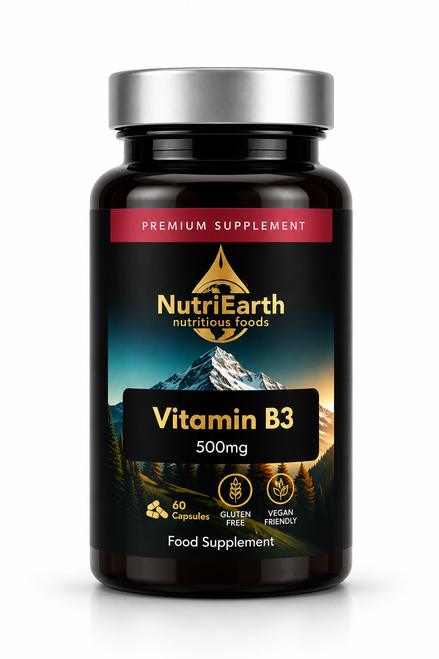
• High strength – Each capsule provides 500mg NMN.
• NMN can increase NAD+ biosynthesis.
• Suitable for Vegans & Vegetarians
B-Nicotinamide Mononucleotide also known as NMN is becoming increasingly popular and for good reason. As we age our NAD+ levels decrease. Some report by middle age, our NAD+ levels have plummeted to half that of our youth. Taken orally, NMN is rapidly absorbed and converted to NAD+. In numerous studies, supplementation with NMN has increased NAD+ biosynthesis.
NMN is naturally found in small amounts in fruits and vegetables such as avocados, broccoli, cabbage, edamame, and cucumbers. The majority of NMN in our bodies is synthesized from vitamin B3 in the form of nicotinamide. NMN appears to be stable in water; in one study 93%–99% of NMN was maintained intact in drinking water at room temperature for 7–10 days.
Each capsule provides 500mg of NMN.
Directions
Take one capsule per day. Do not exceed the recommended daily intake.
Ingredients:
NMN (Nicotinamide Mononucleotide), Capsule Shell: (Hydroxypropyl Methylcellulose).
What are NAD supplements, and how do they work?
NAD (also known as NAD+) may be less familiar than other nutrients, but it is gaining attention for its important role in the body.
Interest in NAD supplements has grown significantly, with online searches increasing by more than 200% in 2025. This rising popularity, particularly across Google and TikTok, reflects a growing interest in new ways to support energy levels and overall wellbeing.
So, what is NAD+, why is it important for the body, and what does the current scientific research tell us about its potential benefits? In this guide, we explore the essentials to help you better understand NAD supplements and how they work.
What is NAD?
NAD, short for nicotinamide adenine dinucleotide, is a naturally occurring molecule found in every living cell. It plays an important role in converting the food we eat into energy and supporting the everyday processes that keep our cells functioning.
NAD exists in different forms, including NAD⁺, which is involved in cellular energy production. It helps mitochondria — tiny structures found in most cells — convert nutrients and oxygen into usable energy. Often described as the cell’s powerhouses, mitochondria help supply the energy needed for the body to carry out its normal functions.
NAD plays a role in several essential biological processes, including:
-
Energy metabolism: helping the body convert nutrients into usable energy.
-
DNA maintenance: supporting processes involved in maintaining and repairing DNA.
-
Cellular function: participating in the everyday processes that help cells function normally.
Types of NAD supplements
NAD supplements contain NAD itself or ingredients that help the body produce it through its natural biological pathways. According to Dr Pam Mason, nutritionist for the Health & Food Supplements Information Service, more than 400 enzymes rely on NAD to function properly, and NAD levels tend to decline with age.
Given its role in normal cellular processes, NAD has attracted growing interest among people looking to support their energy levels and maintain their health as they get older. This has contributed to the popularity of vitamins and supplements designed to support the body's natural NAD pathways.
NAD supplements generally fall into two main categories:
-
NAD⁺ supplements: These contain NAD itself, the molecule involved in a range of cellular processes. However, questions remain about how effectively NAD taken orally is absorbed and used by the body, so further research is needed to establish its effectiveness.
-
NAD precursors: These provide ingredients that the body can use to produce NAD⁺. Examples include nicotinamide riboside (NR) and nicotinamide mononucleotide (NMN), both of which have been investigated in scientific studies. These compounds are closely related to the body's metabolism of vitamin B3.
NAD supplements are commonly available as capsules and powders, with some formulations combining NAD-related ingredients with other nutrients.
If you are considering taking an NAD supplement, speak to a pharmacist or healthcare professional beforehand, particularly if you are pregnant, breastfeeding, taking medication or managing an existing health condition.
What does the research say?
Scientific interest in NAD supplementation is growing, but research into its potential health benefits is still developing. Some small human studies have found that certain NAD precursors, including NMN and NR, can increase NAD⁺ levels in the blood. However, raising NAD⁺ levels does not necessarily mean that a supplement will produce noticeable improvements in health.
Other research has explored potential links with sleep and markers associated with ageing. Although some findings appear promising, the available evidence remains limited, and larger, well-designed studies are needed to confirm these results.
Dr Pam Mason explains that laboratory research has produced encouraging findings, while human studies have shown that supplementation can increase NAD levels in the blood. However, limitations in study design make the results difficult to interpret, and there is currently insufficient evidence to establish clear clinical benefits in humans.
Overall, current research suggests that some NAD precursors can influence NAD⁺ levels in the body. However, further evidence is needed to determine whether these changes translate into meaningful benefits for energy, healthy ageing or other aspects of wellbeing. Longer-term studies will also be important in understanding their safety and effectiveness.
Why do NAD levels change with age?
NAD⁺ levels can change throughout life, with research suggesting that they decline in certain tissues as we get older. The reasons behind these changes are complex and may involve several biological processes.
NAD⁺ is used by enzymes involved in essential cellular activities, including energy metabolism and DNA maintenance. Changes in these processes, alongside shifts in the body's ability to produce and recycle NAD⁺, may contribute to age-related changes in NAD availability.
Other factors, including oxidative stress — which occurs when there is an imbalance between free radicals and the body's antioxidant defences — may also influence cellular function. Environmental exposures and lifestyle factors can affect overall health, although their specific effects on NAD levels are not yet fully understood.
Everyday habits remain an important part of supporting general health and wellbeing. Eating a balanced diet, staying physically active and maintaining good sleep habits can all contribute to healthy bodily function as you age.
NAD, ageing and energy
Although NAD⁺ plays an important role in cellular energy metabolism, its potential benefits as a supplement are still being investigated. At present, there is insufficient clinical evidence to conclude that NAD supplements improve energy levels, slow the ageing process or provide other measurable health benefits in humans.
Ageing is a natural and complex process, and no supplement has been conclusively shown to stop or reverse it. While research into NAD continues to develop, supplements are best viewed as a possible addition to a healthy lifestyle rather than a substitute for a balanced, varied diet and other healthy habits.
As further studies emerge, scientists will be better placed to determine whether NAD supplementation can offer meaningful benefits and which forms, doses and populations may be most relevant.